Executive Summary: The Era of High-Frequency, Multi-Layered Interconnection
In the rapidly changing world of global electronics manufacturing, the demand for high-density, multi-layer printed circuit boards (PCBs) is growing at an unprecedented rate. Driven by advancements in artificial intelligence (AI), edge computing, 5G communications, and modern server arrays, electronic systems require boards that can manage extremely fast signals while maintaining excellent thermal and mechanical stability. As a premier provider in China's advanced PCB electronics space, Kryntel Memory Technology (China) Co., Ltd. stands at the forefront of this shift, combining advanced multilayer PCB fabrication with world-class memory module and motherboard design.
Modern multilayer PCBs serve as the essential foundation for complex high-speed systems. Designing these systems involves solving difficult challenges in material science, signal integrity, and manufacturing precision. Achieving low dielectric loss, control over line width and spacing, and high-yield interlayer registration requires advanced machinery and deep engineering expertise. This document provides an in-depth analysis of global multilayer PCB trends, Kryntel’s manufacturing capabilities, detailed technical specifications, and a clear roadmap for system integrators seeking reliable, high-performance hardware solutions.
9+
Years Industry Experience
280+
New Products Launched Annually
1,200+
Global Supply Chain Partners
USD 18M
Peak Annual Export Value
1. The Global Landscape & Industrial Trends of Multilayer PCBs
The international printed circuit board industry is undergoing a structural shift toward high-layer-count configurations (typically 6 to 36 layers and beyond). Historically, double-sided and simple 4-layer boards dominated consumer markets. However, the rise of modern processing units—such as Intel's LGA1700/LGA1851 platforms, AMD's SP5 sockets, and Rockchip's high-speed RK3588S SoC—demands much more sophisticated packaging.
In 2024, the global multilayer PCB market is characterized by three major trends:
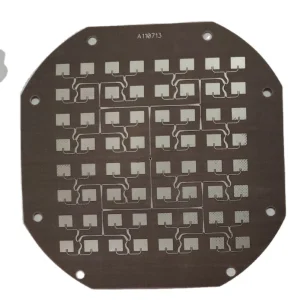
Extreme Speed and Low Dielectric Materials: With standard data rates for DDR5 memory pushing beyond 6400 MT/s, and PCIe Gen 5 operating at 32 GT/s per lane, standard FR-4 materials are no longer sufficient. Designers are turning to high-frequency laminates such as Taconic TLY-5 (0.254mm thickness) and Rogers series materials. These offer low dissipation factors ($D_f$) and stable dielectric constants ($D_k$) to prevent signal degradation.
Complex Microvia Structures: Modern ball grid array (BGA) components have tight pin pitches, requiring High-Density Interconnect (HDI) structures. These designs use blind vias, buried vias, and stacked microvias to route signals through the inner layers without causing excessive crosstalk or impedance mismatches.
Thermal and Power Integrity: High-performance server platforms draw hundreds of watts, generating significant heat. Multilayer designs must integrate thick copper power planes (up to 3 oz or more) and combine them with aluminum substrate backplanes and passive copper/aluminum heat sinks. This approach helps spread heat efficiently and prevents hot spots that can cause system failure.
2. Kryntel Memory Technology: A Legacy of Engineering Excellence
Founded in 2016, Kryntel Memory Technology (China) Co., Ltd. has established itself as a leading manufacturer of high-performance memory modules and advanced system boards. Over the course of 9 years of industry experience, the company has built robust R&D and production facilities, generating between USD 8 million and USD 18 million in annual export revenue. With 6 years of focused export experience, Kryntel provides high-quality OEM/ODM solutions to clients across the United States, Germany, India, Brazil, and the United Arab Emirates.
Operating out of a highly specialized, cleanroom-standard R&D and testing facility, Kryntel focuses on precision, reliability, and technical innovation. Our deep expertise in advanced high-speed SMT assembly, multi-stage signal verification, and multi-layer board layout allows us to design and manufacture components that operate reliably under demanding conditions.
Advanced Customization
Complete OEM/ODM customization services including custom PCB layouts, trace length matching, tailored thermal solutions, latency and frequency optimization, and custom SPD firmware tuning.
Rigorous Testing (QA)
Our dedicated QA team of 42 professionals oversees incoming material inspection (IQC), in-process quality control (IPQC), high-temperature aging chambers, motherboard compatibility sweeps, and full bandwidth stress testing.
Strong R&D Team
Our engineering department features 160 specialists in memory architecture, signal integrity simulations, and thermal dynamics. The team successfully launched 280 new products across the DDR4 and DDR5 portfolios last year.
3. Multilayer PCB Technical Specifications & Material Science
To maintain signal integrity at high frequencies, engineers must select the right materials and design the proper stack-up. High-layer PCBs require balancing physical thickness against routing density. For example, a standard 8-layer or 10-layer server-class motherboard requires careful management of dielectric thickness to meet target impedance values.
PCB Class / Type
Laminate Materials
Dielectric Loss ($D_f$)
Ideal Applications
Standard Multilayer
High-Tg FR-4 (IT-180A / S1170)
0.015 - 0.020
Standard industrial control boards, power distribution, basic consumer motherboards
High-Speed Digital
Panasonic Megtron 6 / Doosan DS7402M
0.002 - 0.004
Server motherboards, DDR5 memory cards, PCIe Gen 5 controller interfaces
RF & High-Frequency
Taconic TLY-5 (0.254mm) / Rogers RO4003C
0.0009 - 0.0019
Radar modules, 5G base stations, satellite communications, high-frequency transceivers
Metal-Backed Thermal
Aluminum Substrate with high-thermal dielectric
N/A (Thermal Cond: 2.0-3.0 W/m-K)
LED systems, high-power converters, automotive battery chargers, CPU radiators
Impedance Control & Trace Geometry
In high-speed designs like DDR4 and DDR5 memory modules, trace geometry is critical. The design team uses advanced software to calculate trace layouts that meet target impedance specifications:
Single-Ended Impedance: Target is typically $50 \Omega \pm 10\%$ for general high-speed IO lines.
Differential Impedance: Target is typically $90 \Omega \pm 10\%$ or $100 \Omega \pm 10\%$ for USB, PCIe, and Ethernet signals.
Skin Effect Mitigation: Signal current flows along the outer surface of the trace at higher frequencies. Using smooth, low-profile copper foil helps reduce signal attenuation caused by surface roughness.
High-performance electronics demand boards tailored to specific environments. Standard designs are not enough to meet the needs of industrial, automotive, and server applications. The following sections outline common system configurations:
A. Industrial Automation & Power Instrumentation
Industrial equipment operates in electrically noisy environments and must handle high currents. These designs require thick copper planes and immersion silver surface finishes (Immersion Silver / HASL) to ensure reliable solder connections. Key features include:
Robust electrostatic discharge (ESD) protection.
High-dielectric isolation between control and power sections.
Compliance with IPC-A-610 Class 2 or Class 3 reliability standards.
B. Server & Data Center Applications (AMD SP5 & Intel LGA1700 Platforms)
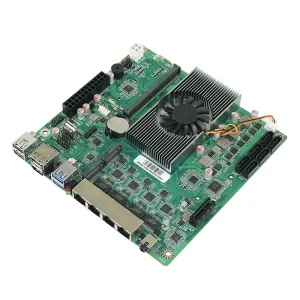
Cloud computing hardware requires high-density multilayer boards capable of managing high power loads and complex signal routing. Systems built around AMD SP5 or Intel LGA1700 processors use motherboards with up to 16 layers. These boards require:
Backdrilling of stub lines to prevent signal reflections on high-speed pathways.
Carefully matched trace lengths to minimize phase differences in parallel memory buses.
Integrated high-performance thermal cooling solutions, including active heat pipes, vapor chambers, and server water blocks.
C. Edge AI Computing Systems (Rockchip RK3588S SoC Platform)
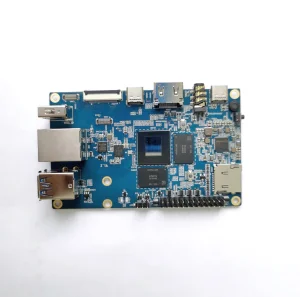
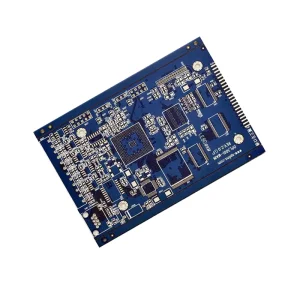
Edge AI boards run deep neural networks directly on the device, requiring a small footprint and high routing density. Utilizing the Rockchip RK3588S, these designs require:
A multi-layer HDI layout with microvias to route signals out from high-density BGA packages.
Dedicated ground and power planes next to signal layers to minimize electromagnetic interference (EMI).
Robust onboard power distribution networks (PDN) to handle sudden changes in processor current during AI workloads.
5. Quality Assurance & Signal Integrity Testing Matrix
To ensure reliability across varied industrial environments, Kryntel implements a rigorous quality control framework. Using high-precision test equipment and automated optical systems, the QA team evaluates each production run against strict physical and electrical standards:
Verification Methodologies & Standards
Automated Optical Inspection (AOI): Used after solder paste printing and component placement to detect defects such as offsets, solder bridges, or missing parts.
Time-Domain Reflectometry (TDR): Measures trace impedance profiles to ensure they match target differential values (e.g., $90 \Omega$ or $100 \Omega$) along the entire path.
High-Temperature Stress Testing: Systems undergo thermal cycling (typically from $-40^\circ\text{C}$ to $+85^\circ\text{C}$) to verify solder joint integrity and material stability.
Motherboard Compatibility Matrix: Products are tested on major chipsets (including Intel H610, H61, B760, and AMD AM5, SP5) to ensure wide system compatibility.
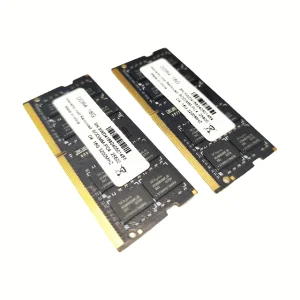
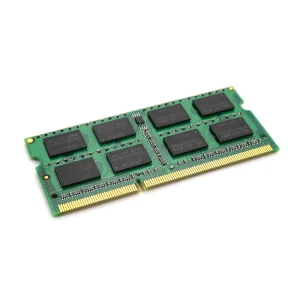
Active Bandwidth Profiling: Evaluates memory modules at target speeds (e.g., DDR4 at 3200MT/s or DDR5 at 5600MT/s) to confirm error-free operation.
6. Technical FAQ: Deep Engineering Insights
Q1: What are the primary advantages of utilizing Taconic TLY-5 laminates for high-frequency multilayer PCBs?
Taconic TLY-5 laminates are engineered with woven fiberglass fabric impregnated with PTFE (Teflon). They feature a low dielectric constant ($D_k = 2.2 \pm 0.02$) and a low dissipation factor ($D_f \approx 0.0009$ at 10 GHz). This makes them well-suited for high-frequency RF systems. With a thickness of 0.254mm, they support thin stack-ups with low signal loss, high dimensional stability, and minimal water absorption, which is critical for consistent performance in humid environments.
Q2: How does layer stack-up optimization affect signal integrity in high-speed DDR5 routing?
DDR5 runs at high speeds, making signal path design critical. To minimize noise and crosstalk, signal layers must be placed adjacent to solid copper reference planes (Ground or Power). In a typical 8-layer stack-up, layers 3 and 6 are typically designated as high-speed routing paths, sandwiched between ground planes on layers 2, 4, 5, and 7. This arrangement helps control impedance, reduces loop inductance, and provides shielding against electromagnetic interference (EMI).
Q3: Why is immersion silver (Im-Ag) preferred over HASL for industrial automation PCBs?
Immersion Silver (Im-Ag) provides a flat, coplanar surface finish, which is essential for placing fine-pitch surface-mount (SMD) components. Unlike Hot Air Solder Leveling (HASL), which can leave uneven bumps, immersion silver ensures flat pads for secure BGA and QFN connections. It also provides excellent electrical conductivity, good solderability, and a lower total cost than Electroless Nickel Immersion Gold (ENIG), making it a reliable choice for industrial automation and power boards.
Q4: What role does backdrilling play in multilayer motherboard fabrication?
When a signal transitions between layers through a via, it leaves behind an unused portion of the copper tube, known as a "stub." In high-speed interfaces like PCIe Gen 5, these stubs act as open transmission lines, creating signal reflections that can degrade the signal. Backdrilling removes this unused copper stub, helping to clean up signal waveforms, reduce jitter, and improve overall system reliability.
Q5: How does Kryntel verify motherboard and memory compatibility across different platforms?
Our quality control process uses a dedicated motherboard compatibility matrix. We test production samples on a wide range of platforms—from legacy H61/P55 systems up to modern LGA1700, AM5, and SP5 configurations. These boards run under full system loads for extended periods to confirm stable voltage delivery, correct SPD profile timing, and error-free memory operations, ensuring high compatibility and stability in the field.
Complete Multilayer Engineering Portfolio
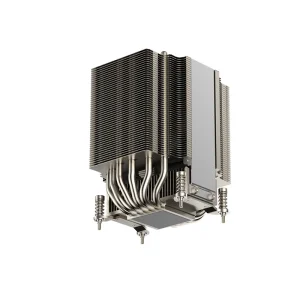
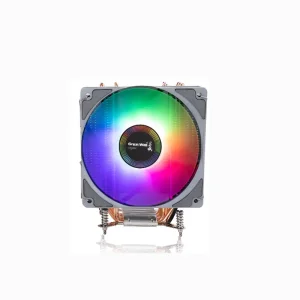
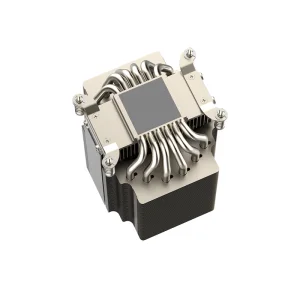
LGA1700 M-ATX Compact 6-Tube Copper Aluminum Red LED Heat Sink 220W Air Cooled 4Pin Interface Supports Intel CPU Computer Case
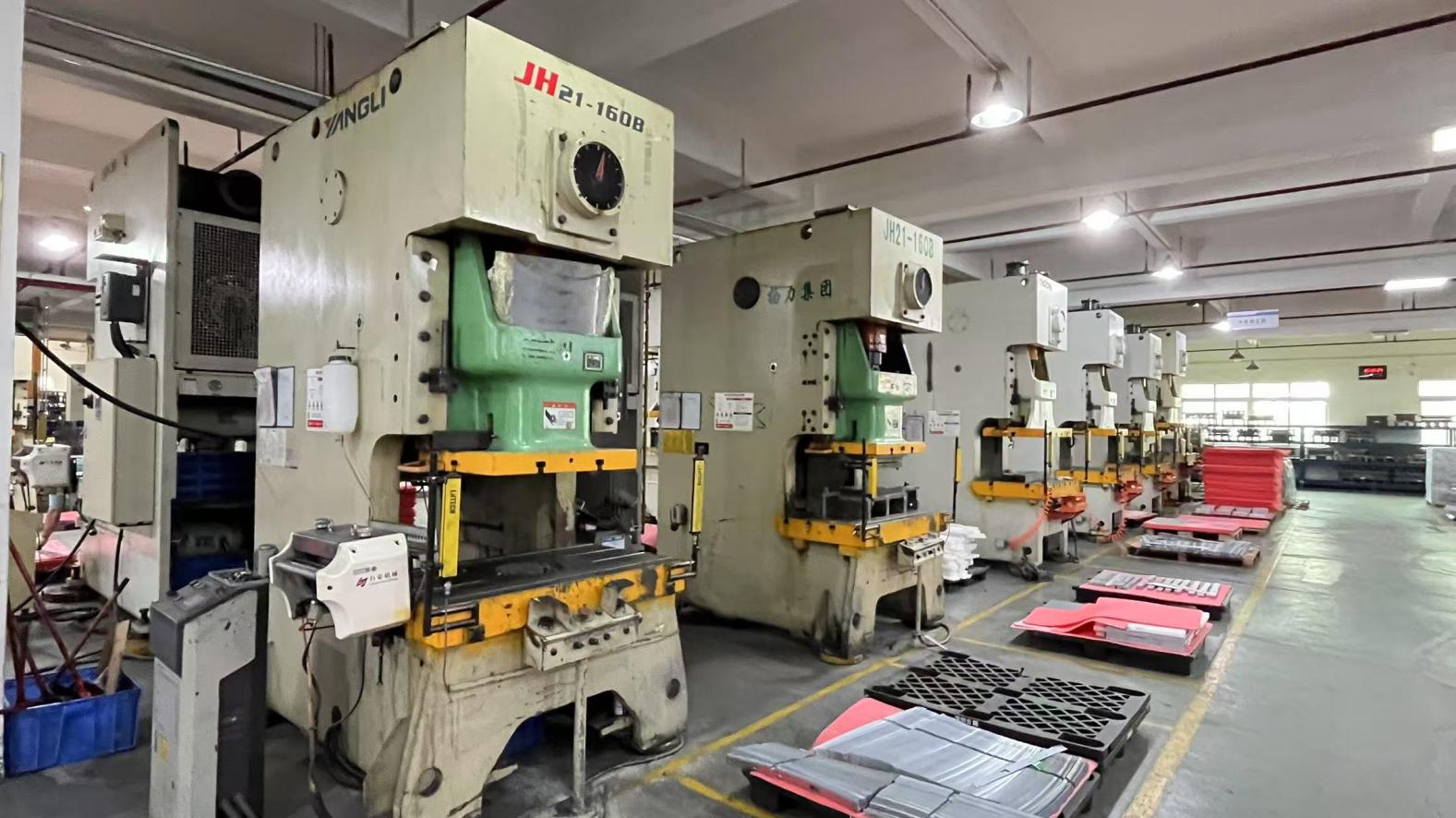
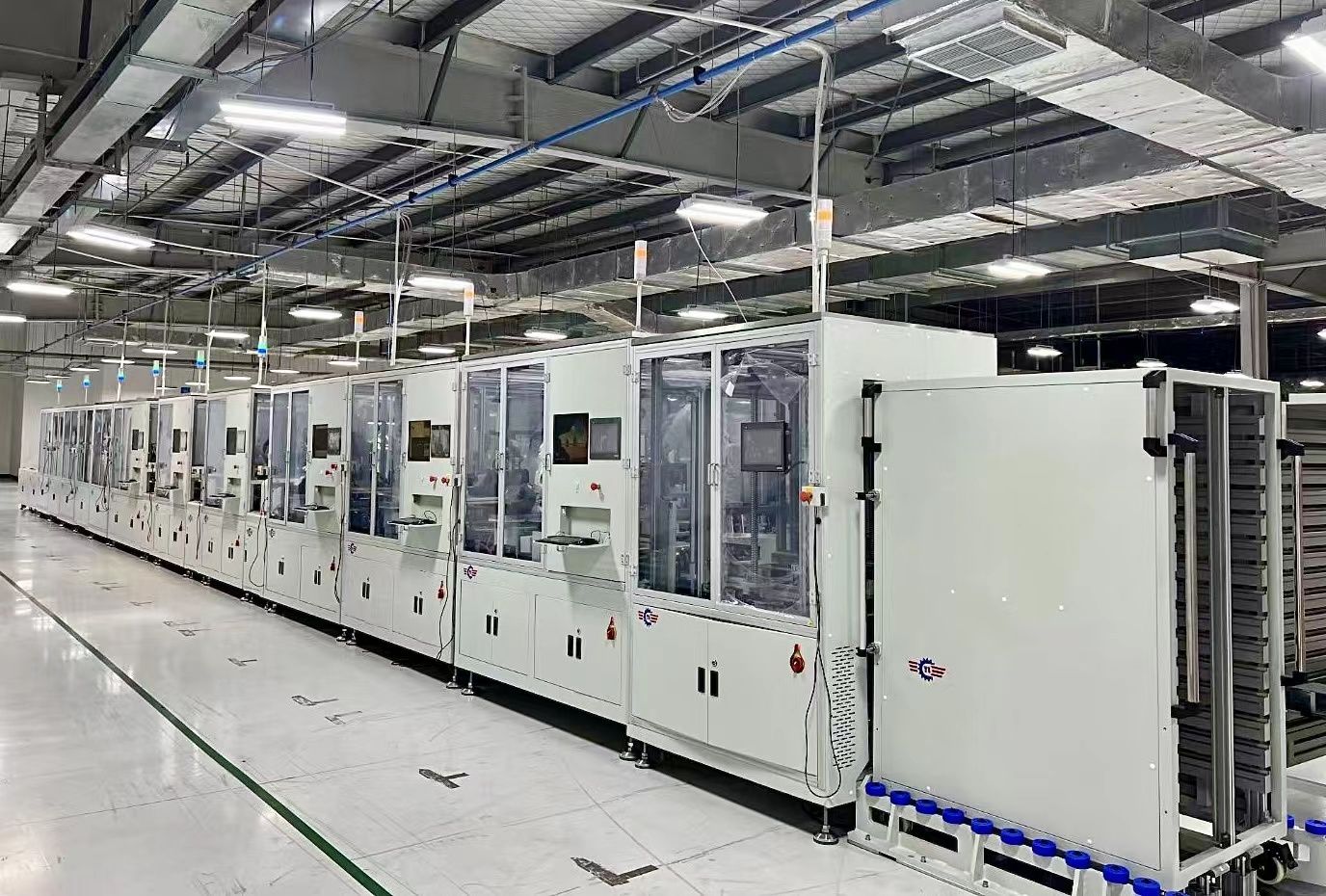
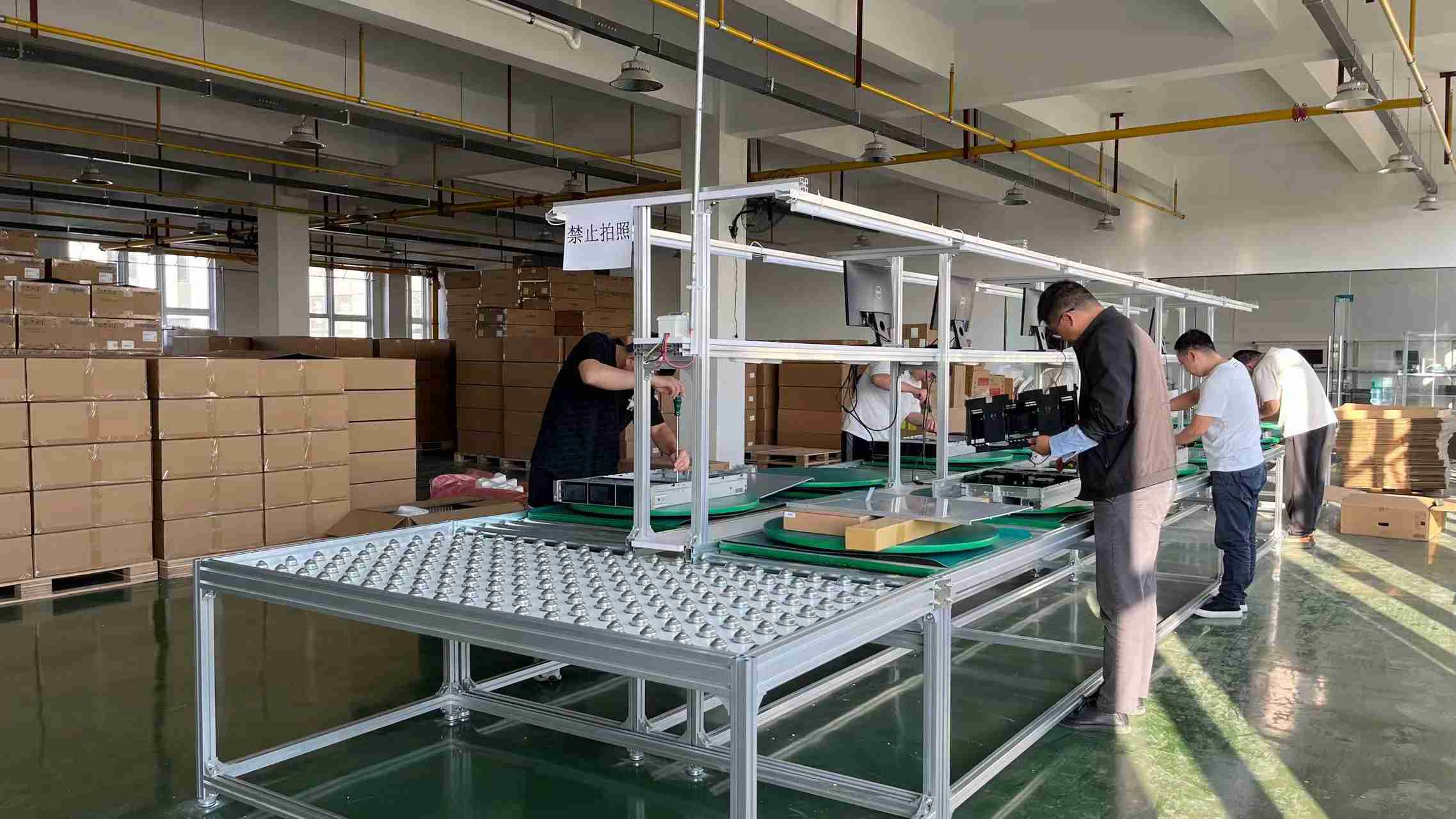
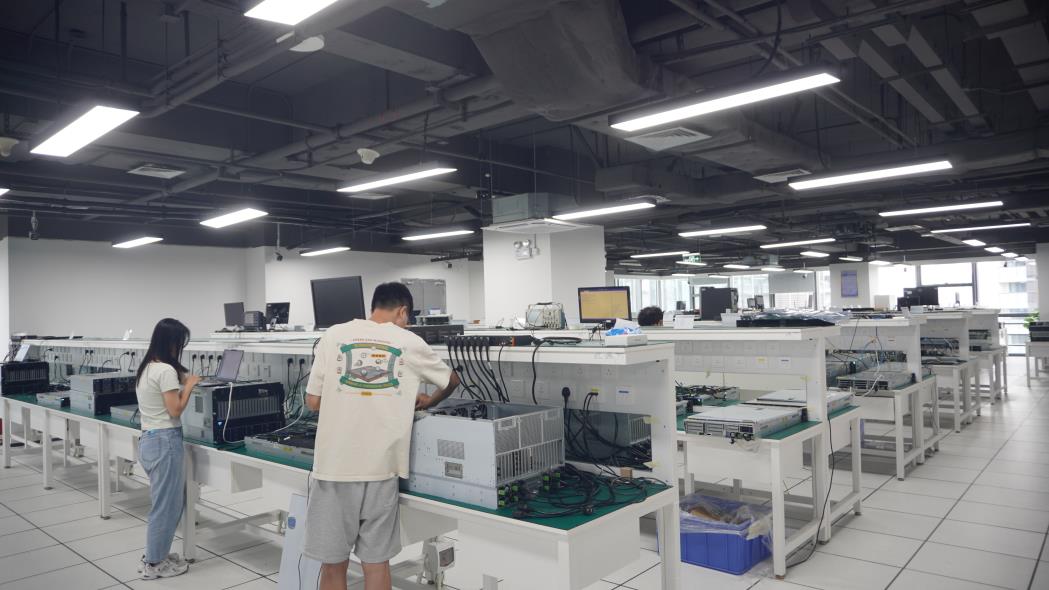
Our High-Tech SMT & Cleanroom Production Facilities
Precision assembly requires clean, controlled environments. At Kryntel, our production facilities maintain cleanroom standards with active ESD protection, temperature-controlled SMT bays, automated material handling, and modern reflow ovens. This environment helps ensure high quality and reliability across our multilayer PCBs and complex memory architectures.

 Kryntel