The memory landscape is often divided into two essential types: DRAM and SRAM. Understanding the DRAM vs SRAM difference is critical for those in tech industries. As noted by Dr. Emily Chen, a renowned memory systems expert, “Choosing between DRAM and SRAM can significantly impact system performance.”
DRAM, or Dynamic Random Access Memory, is known for its high density and cost-effectiveness. It's commonly used in applications requiring large storage capacities. Conversely, SRAM, or Static Random Access Memory, provides faster access speeds and lower latency, making it suitable for cache memory in processors. This distinction can determine how a system performs under load.
Despite their differences, both DRAM and SRAM have their weaknesses. DRAM requires constant refreshing, which adds complexity. Meanwhile, SRAM is typically more expensive to produce and occupies more chip area. Understanding these nuances helps engineers design better systems, yet many still overlook key aspects. Reflecting on the DRAM vs SRAM difference can ultimately lead to more informed decisions in technology development.
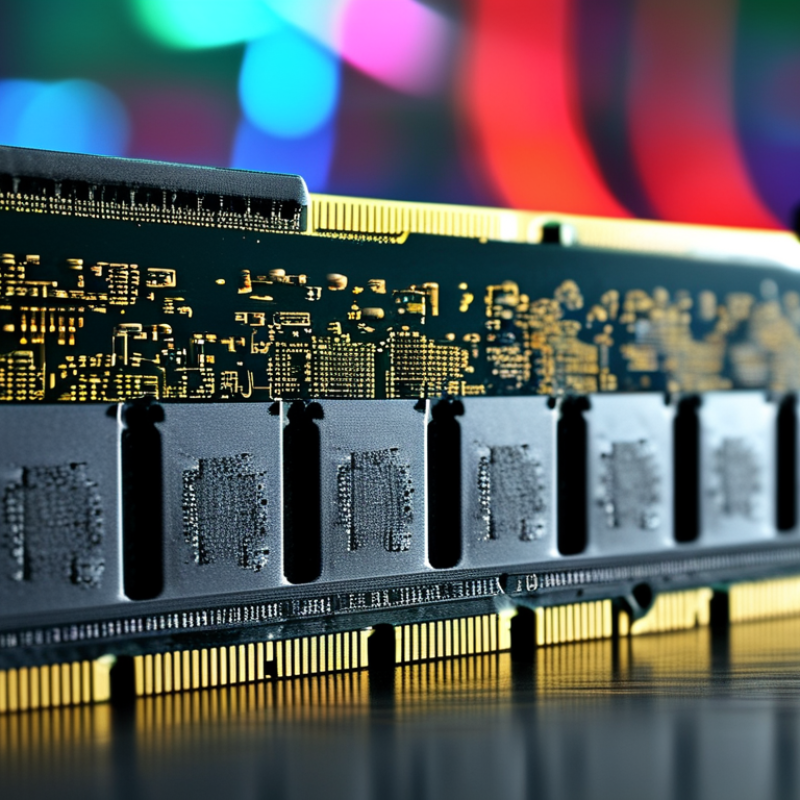
Overview of DRAM and SRAM
Dynamic Random-Access Memory (DRAM) and Static Random-Access Memory (SRAM) are both crucial for computer systems, yet they differ significantly. DRAM stores bits using capacitors and requires constant refreshing to maintain data. Its structure makes it more compact, favoring high-density storage. This quality is vital for applications like graphics cards and main memory in computers.
In contrast, SRAM uses flip-flops to store data, which makes it faster and more reliable than DRAM. However, this speed comes at a price—it uses more transistors and occupies more space. It is often utilized in cache memory for processors, where efficiency is critical.
Tips: If you're deciding between DRAM and SRAM for a project, consider your application needs. If you need speed, SRAM is ideal. DRAM, while slower, offers greater memory capacity. Be aware of power consumption; SRAM tends to require more power for operations. Balancing speed and efficiency is key.
Fundamental Operating Principles of DRAM
Dynamic Random Access Memory (DRAM) operates on the principle of storing data using capacitors and transistors. Each memory cell in a DRAM chip holds a bit of data as an electrical charge in a capacitor. This charge diminishes over time, necessitating periodic refreshing to maintain data integrity. DRAM, while slower than SRAM, has a higher density, making it a cost-effective choice for larger memory applications.
Tip: For optimal DRAM performance, ensure your system has adequate cooling. Overheating can lead to data corruption or loss.
Another essential characteristic of DRAM is its asynchronous operation. Unlike SRAM, which allows for faster access times due to its static nature, DRAM requires additional time for refresh cycles. This can create latency issues, especially in high-performance applications where speed is critical.
Tip: Regularly update your firmware to optimize DRAM functions. Outdated software may not effectively manage memory refresh cycles.
In summary, while DRAM is not without its flaws, such as the need for constant refreshing and slow access times, its advantages in capacity and cost-effectiveness remain strong. Understanding these fundamentals can help users choose the right type of memory for their needs.
What Are the Key Differences Between DRAM and SRAM?
| Feature |
DRAM |
SRAM |
| Type |
Dynamic |
Static |
| Data Storage |
Capacitors |
Flip-flops |
| Speed |
Slower |
Faster |
| Power Consumption |
Higher |
Lower |
| Cost |
Lower |
Higher |
| Usage |
Main memory |
Cache memory |
| Volatility |
Volatile |
Volatile |
| Refresh Requirement |
Requires refresh |
No refresh needed |
Fundamental Operating Principles of SRAM
Static Random Access Memory (SRAM) operates on a fundamentally different principle than Dynamic Random Access Memory (DRAM). In SRAM, data is stored using latch circuits, which consist of multiple transistors. This design allows SRAM to retain data without needing periodic refreshing, unlike DRAM. In applications requiring faster access times, SRAM shines due to its reduced latency. Therefore, it is often found in cache memory for processors and high-speed applications.
The complexity of SRAM architecture leads to a higher manufacturing cost compared to DRAM. Reports from industry analysts indicate that SRAM can be 5 to 10 times more expensive to produce than DRAM. However, this cost is justifiable in applications where speed is critical. Furthermore, SRAM consumes more power in static conditions than DRAM, though it performs better in active states.
Despite its advantages, SRAM brings challenges. Its greater size per bit results in lower memory density. This makes it less suitable for high-capacity memory solutions. Industry data indicates that while SRAM remains essential for cache memory, its market share is small compared to DRAM. Balancing performance and cost is an ongoing dilemma in the manufacturing process.
Key Performance Metrics: Speed, Density, and Power Consumption
When comparing DRAM (Dynamic RAM) and SRAM (Static RAM), key performance metrics like speed, density, and power consumption are critical. DRAM typically offers higher density, allowing more memory in a smaller space. It operates slower than SRAM, making it less ideal for applications requiring quick access. Industry reports show that DRAM can reach speeds of up to 3200 MT/s, while SRAM can operate at speeds above 500 MB/s, depending on the configuration.
Power consumption is another vital factor. DRAM consumes less power when idle but requires refreshing, which can lead to higher overall energy use in active states. Conversely, SRAM consumes more power consistently, especially as technology advances. Research indicates that SRAM can use up to 4 times the power of DRAM per bit, particularly in standby mode.
Tip: When designing devices, consider the trade-off between speed and density. If your application demands rapid access, SRAM might be worth the cost despite its power draw. Also, balance your choices based on the specific use case, whether it's for mobile devices or high-performance computing. This can help avoid compromises that can affect overall efficiency.
Applications and Use Cases for DRAM and SRAM
When exploring applications for DRAM and SRAM, it's crucial to note their distinct roles. DRAM, or Dynamic Random Access Memory, excels in tasks requiring high density and cost effectiveness. It's commonly found in laptops and servers, managing large amounts of data. According to a 2022 market report, DRAM accounts for over 50% of global memory market revenue due to its widespread use in personal computing.
In contrast, SRAM, or Static Random Access Memory, is typically faster and utilizes less power. This makes SRAM ideal for cache memory in processors. Its speed enhances performance in high-frequency applications, such as embedded systems and telecommunications. Reports indicate that the growing demand for efficient data caching solutions is further driving SRAM market growth.
Tip: When choosing memory types for projects, consider speed versus capacity needs. DRAM is better for large data sets, while SRAM is optimal for speed-critical tasks.
It's worth mentioning that the balance of these technologies is not perfect. DRAM can introduce latency, while SRAM's higher cost limits its capacity. Assessing these trade-offs can lead to more informed decisions in memory selection.
Key Differences Between DRAM and SRAM
This chart illustrates the typical performance characteristics of DRAM and SRAM in terms of Access Time, Density, Power Consumption, and Cost. It highlights how each type of memory is suited for different applications based on these parameters.
FAQS
DRAM is often used in graphics cards and main memory for computers, providing high-density storage.
SRAM provides faster access times and lower latency, which is beneficial in high-speed applications like cache memory.
SRAM is costly due to its complex architecture, needing more transistors and resources for manufacturing.
Yes, SRAM generally consumes more power in static conditions, though it performs better when active.
SRAM is bulkier, leading to lower memory density. This makes it less ideal for high-capacity memory solutions.
Consider speed versus capacity needs. SRAM is great for speed, but DRAM offers higher memory capacity.
No, it's often challenging to balance performance and cost, especially when choosing between DRAM and SRAM technologies.
Yes, SRAM is well-suited for high-speed applications due to its reduced latency, though it is larger in size.
The higher cost and lower density can be drawbacks, requiring careful evaluation of the project’s specific needs.
Conclusion
The article titled "What Are the Key Differences Between DRAM and SRAM?" provides a comprehensive overview of the two types of memory technologies. It begins by outlining the fundamental operating principles of Dynamic Random Access Memory (DRAM) and Static Random Access Memory (SRAM), highlighting their distinctive architectures. One of the main "DRAM vs SRAM difference" is in their speed and density; while SRAM is faster and more efficient for quick access, it tends to be less dense and more costly compared to DRAM, which excels in high-density storage but is slower.
The article further delves into key performance metrics such as speed, density, and power consumption, illustrating how these factors influence the choice of memory for various applications. It concludes by discussing the specific use cases for each memory type, emphasizing how their unique characteristics make them suitable for different environments, from consumer electronics to high-performance computing systems.

 Kryntel